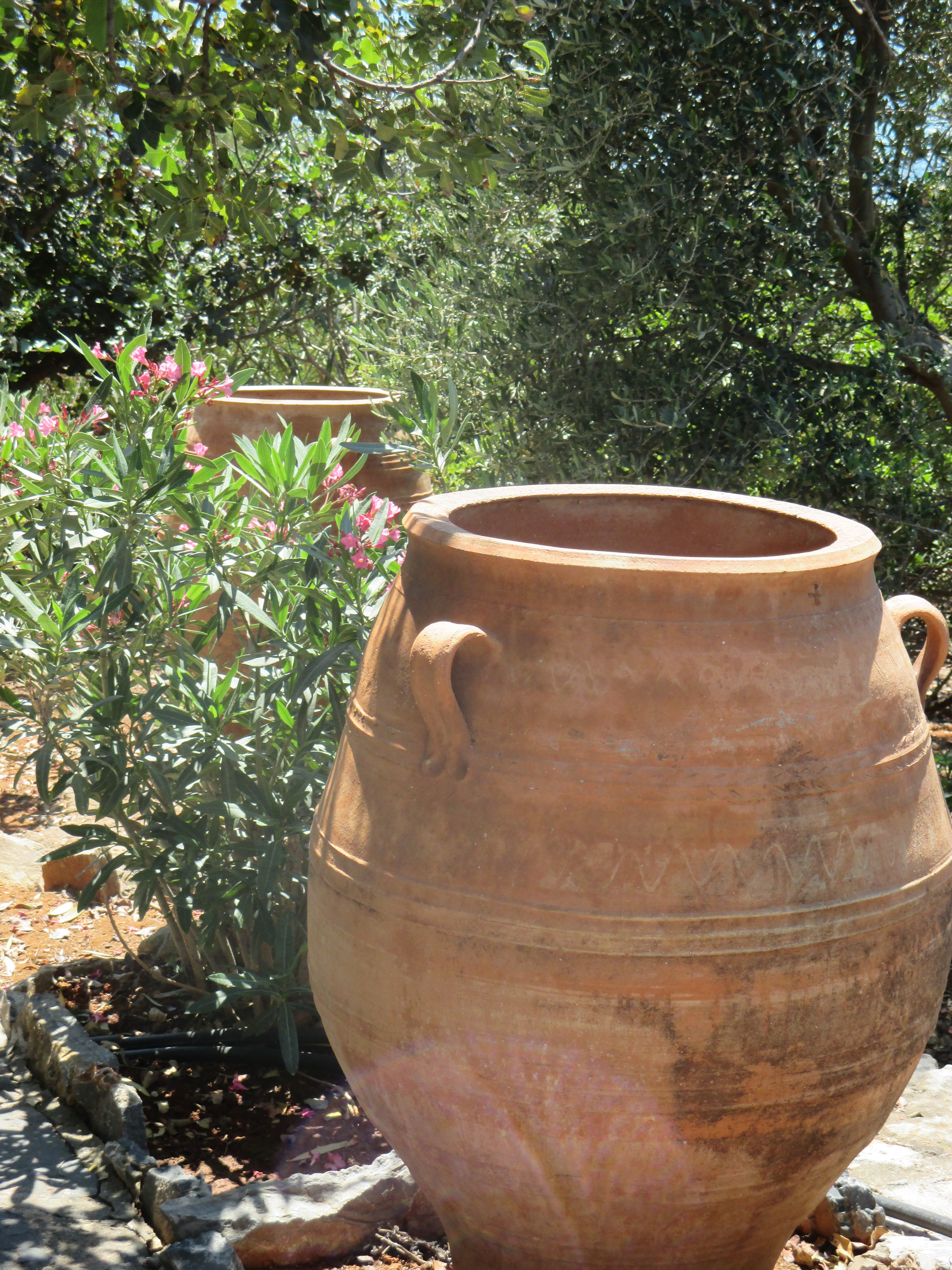
These massive pithoi are now bought as decorative additions to tavernas, hotels and gardens, but originally were used to store oil, wine, olives and nuts and even as burial chambers. Fragments of similar vessels have been found dating back to Minoan times.
The largest of these pots stood taller than a person. Studies suggest they could hold over two tons of oil. Because of their size and weight, the base of the pithoi would be partially buried for stability and they could only be used on the ground floor of buildings. Surprisingly, these gargantuan pots were thrown on a simple wheel. The base was formed prior to coils of clay being added until the desired height was reached. The pot would then be turned and smoothed before curing in a clay oven fuelled by olive wood gathered from the surrounding hills.
Before the potters had trucks to transport their wares, they would travel from the village by donkey carrying tools, clay and even their kilns with them, in order to make pots for customers in situ.
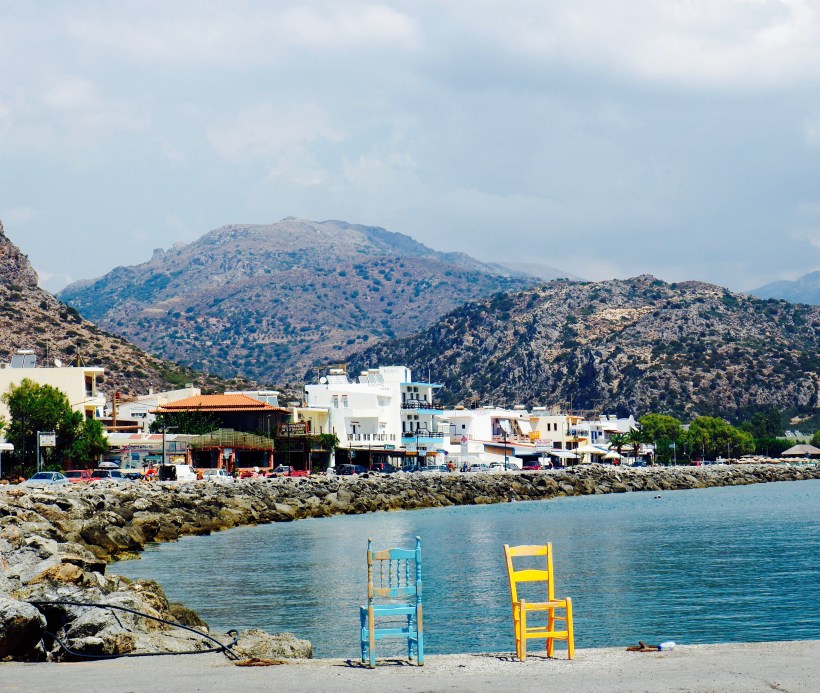
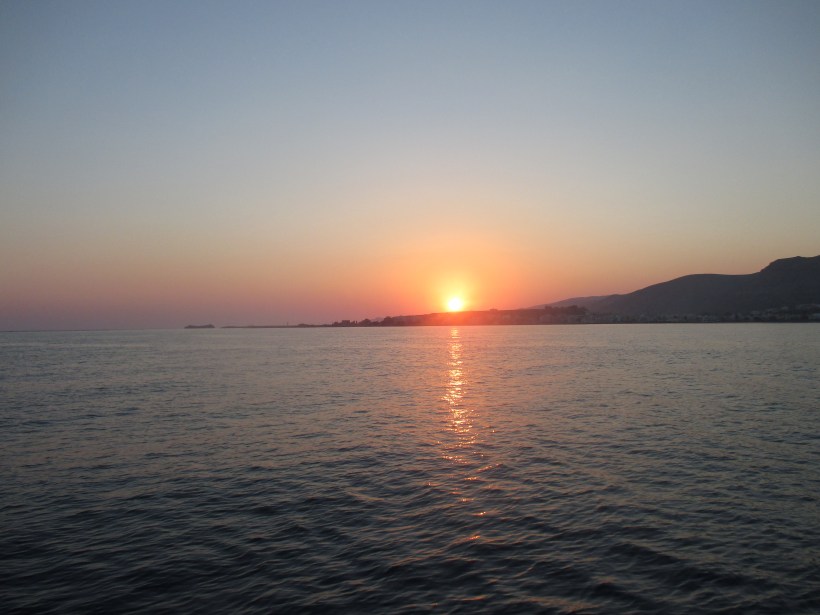 ‘The island of Santorini some way north of Crete shouts long and hard about the beautiful sunsets that can be witnessed from atop its impressive caldera. But the whispered secret of the same event to be seen from the easterly beach in Paleochora is that it is no less spectacular and is a more intimate experience for being clandestine. In keeping with its diffident air, after dark the town bustles but doesn’t shove. As the town blinks and wipes the afternoon sleep from its eyes, it comes awake. Somewhere in the distant lanes a baker leans to knead his dough and the sultry crescent of the moon looks on dispassionate. The tavernas are busy but the air is casual and the visitor can meander contentedly soaking up the pleasures of the streets.’

 Notes From Greece